




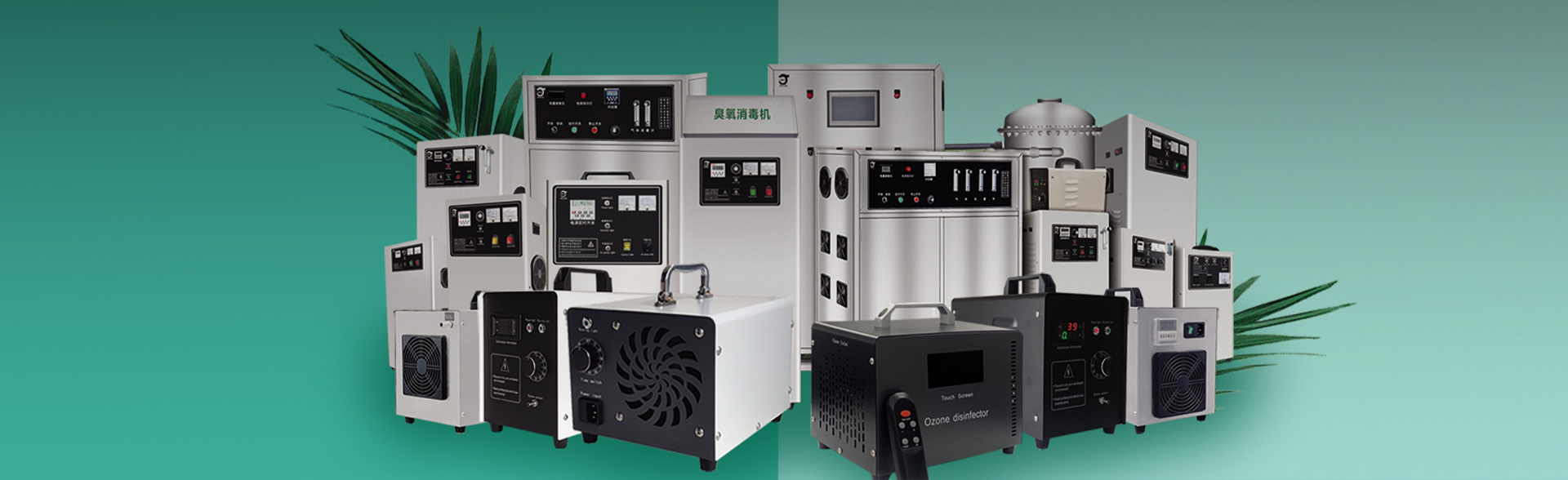
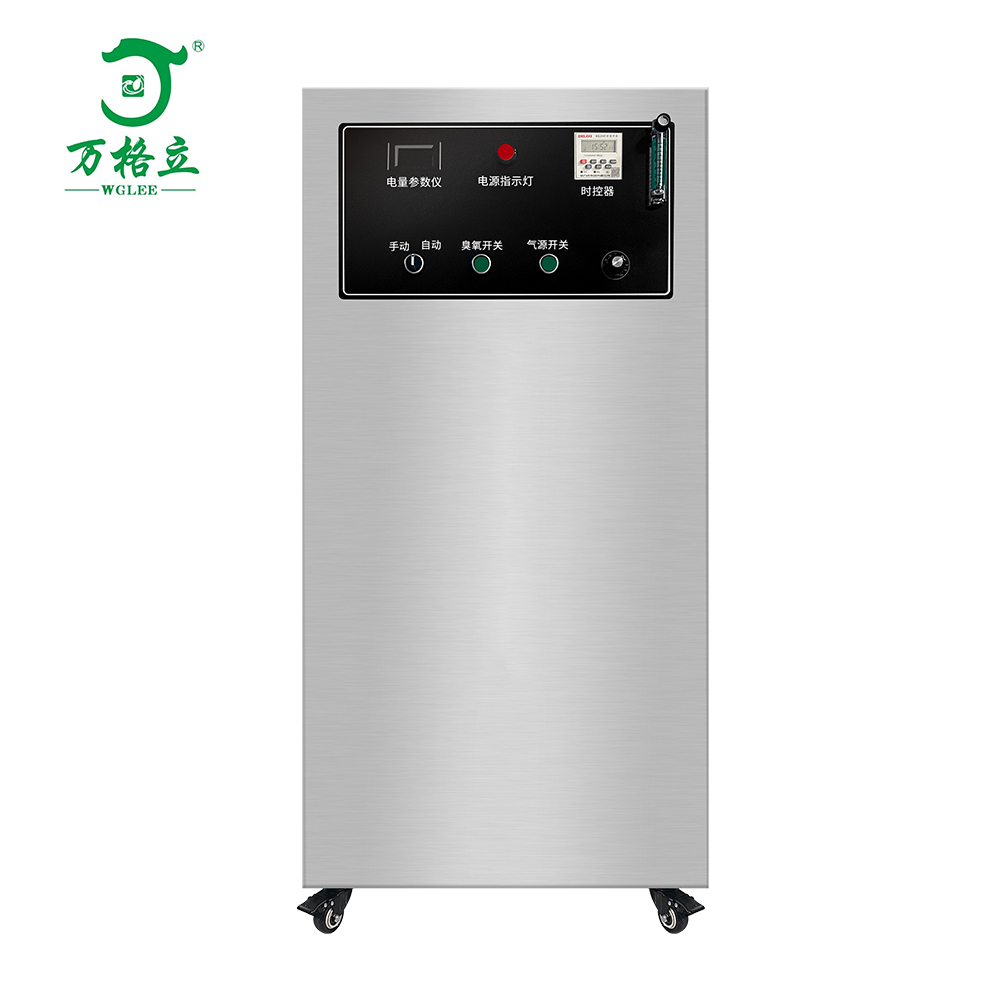
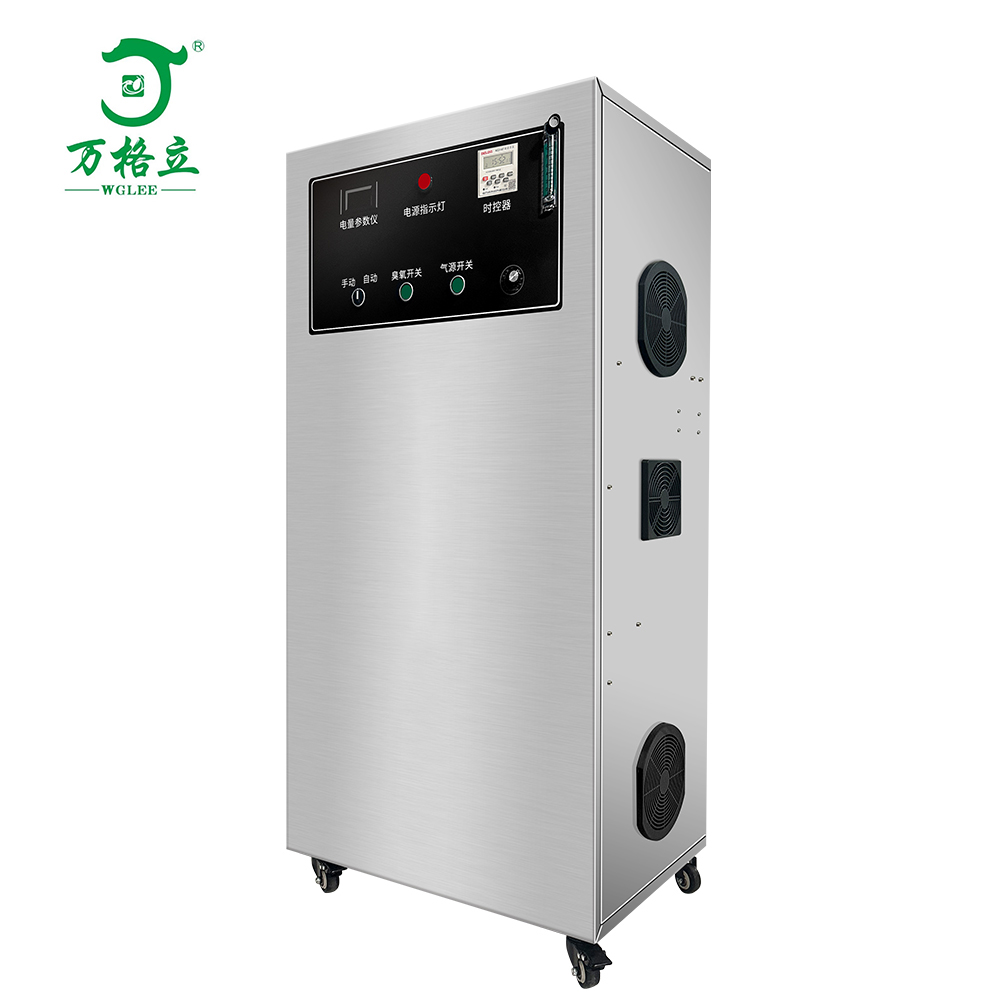
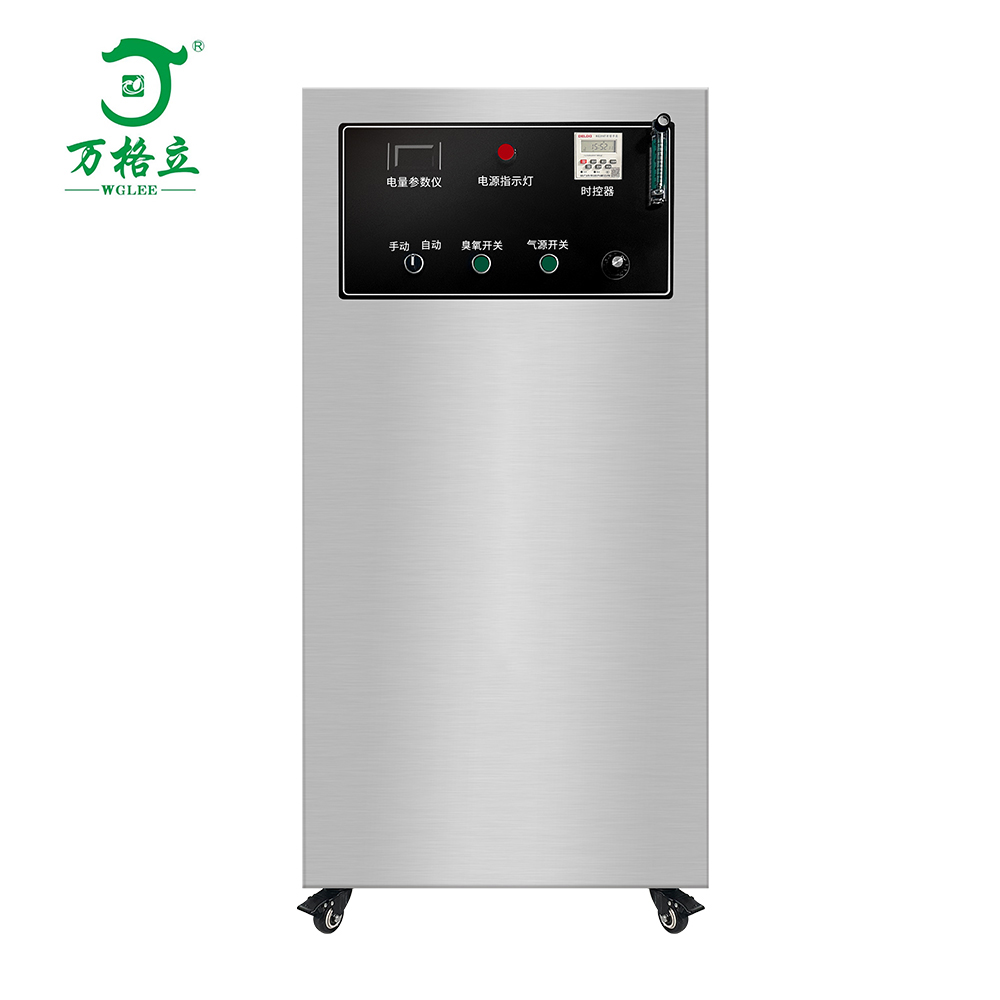
Model: WGL-FW-100G
Name: Air Source 100G/H Ozone Generator
II. Ozone Generator Technical Parameters
Product Model | WGL-FW-100G |
Product Dimensions (L*W*H cm) | 60*40*125 |
Ozone Output (g/h) | 100 |
Ozone Concentration (mg/L) | 15-25 |
Ozone Power Consumption (W) | 1600 |
Input Power | AC220V/50HZ |
Working Voltage (KV) | 3-7 |
Power Frequency | >3000 |
Inlet Gas Flow (L/Min) | 80-120 L/min |
Inlet Pressure (MPa) | 0.3-0.8 |
Inlet Temperature (℃) | ≤20 |
Gas Source Dew Point (℃) | ≤50 |
Cooling Method | Water-cooled + Air-cooled |
Cooling Water Temperature (℃) | ≤30 |
Cooling Water Inlet/Outlet | 4-point external thread (or convert to 12mm OD quick plug) |
Ozone Outlet | 10mm quick twist |
Cooling Water Flow (L/h) | 1400 |
Working Environmental Conditions | Ambient temperature ≤45℃, RH ≤80%, strictly prohibited in flammable and explosive environments. |
Gas Source Used | Air Source |
Machine Configuration | Micro-gap discharge ozone tube, high-frequency high-voltage power supply, air compressor pump, air filter, powerful cooling fan, control circuit (timer, work indicator light, air pump switch, ozone switch, etc.) |
Main Features | 1. Automatic operation (16 sets of timer settings, time error ±2 seconds/month), enabling unattended operation; 2. Manual operation (free switching, can be turned on/off at any time, convenient for temporary use or experiments); |
V. Product Structure (Configuration Technical Advantages)
1. Ozone Tube: Ozone discharge chamber features: The discharge chamber internally uses multiple sets of discharge tubes combined, resembling a honeycomb structure from the side view, commonly known as a honeycomb tube in the industry. The inner and outer electrodes of the discharge tube are made of 316L stainless steel, the outer shell is 304 stainless steel, the dielectric material uses high-purity quartz tube (99.8% SiO₂), combined with PTFE and fluoro-rubber sealing components. The outer electrode is water-cooled. Designed service life is greater than 50,000 hours.
2. High-Frequency High-Voltage Power Supply: High-voltage power supply composition and features: Composed of military-grade variable frequency and voltage PCB circuits and vacuum epoxy high-voltage transformers. Main features: IGBT drive, automatic/manual frequency width, soft start upon power-on (limits inrush current), input overvoltage protection, power converter overheating protection, output short circuit/open circuit protection, audible and visual alarms. The circuit is designed for anti-interference, moisture resistance, and corrosion resistance. It can be flexibly adapted to PLC (0~5V or 4~20mA) control or different supply voltage settings according to customer requirements. Normal service life exceeds 12,000 hours.
VI. Product Features
1. High Voltage Discharge Generator:
This type of ozone generator uses a high-frequency power system to induce electrochemical reactions in oxygen molecules within or around the electric field, thereby producing ozone. This generator has the advantages of mature technology, stable operation, long service life, and high ozone output, making it the most widely used ozone generator in related industries both domestically and internationally.
2. Safe Ozone Cooling Method:
Ozone generators generate significant heat during operation and require cooling; otherwise, ozone decomposes as it is produced due to high temperatures. Water-cooled generators have excellent cooling effects, stable operation, no ozone decay, and can operate continuously for extended periods.
3. Ozone Generator Discharge Technology:
Quartz tubes are most commonly used in high-performance ozone generators due to their high dielectric constant, uniform wall thickness, good ovality, high-temperature resistance, and moisture resistance. Ceramic plates are brittle and prone to cracking, suitable only for some small generators. Ceramic tubes have difficulty controlling wall thickness and ovality, often leading to uneven discharge, so they are less commonly used. Glass tubes and enamel tubes have low dielectric constants, poor high-temperature resistance, and are prone to cracking.
4. Working Principle:
When oxygen-containing gas passes through the discharge gap between two electrodes, some oxygen molecules (O₂) are converted into ozone (O₃), achieving ozone production (see Fig 1). When a varying high voltage is applied to the high-voltage electrode, micro-discharges occur in the discharge gap, decomposing oxygen molecules into free oxygen atoms (O). Some free oxygen atoms recombine with undecomposed oxygen molecules to form ozone (O₃), i.e., O + O₂ = O₃. This is known as "corona discharge" or "silent discharge".
In reality, only part of the electrical energy applied to the electrodes is used for ozone production. Heat is also generated simultaneously during the process and must be effectively cooled using cooling water. Ozone production efficiency is significantly influenced by the quality of the feed gas and the temperature of the cooling water; lower temperatures result in higher ozone production efficiency.
5. Ozone Process Flow:
The ozone generator system consists of: Gas source system, ozone generator host.
6. This product adopts dual ball bearing high-power fans. High speed and large air volume ensure good heat dissipation for internal heating elements, low ozone concentration decay rate, and sufficient ozone output and concentration even after prolonged use.
7. Ozone is a broad-spectrum sterilizer with strong killing effects on various bacteria and viruses. The generated ozone gas has strong oxidation and catalytic effects. Viruses and bacteria are subjected to the action of various free radicals in the ozone gas, causing protein dissociation and denaturation, and reducing the activity of nucleic acids and enzymes, thereby disinfecting, sterilizing, and purifying the air. Ozone degrades and oxidizes toxic and harmful gases such as formaldehyde, carbon dioxide, and xylene through complex physical and chemical reactions, with non-toxic and harmless by-products, avoiding secondary pollution.
VII. Product Applications
1. Air Purification (Place the outlet tube where purification is needed)
(1) Disinfection of hotel rooms, car disinfection, office disinfection
(2) Sterilization and disinfection in production workshops, disinfection of bed sheets, disinfection of wards, school disinfection
(3) Preventing bacterial infection in mushroom and fungus cultivation
(4) Sterilization, preservation, and odor removal in food processing plants
(5) VOC exhaust gas treatment, more effective than photolysis
2. Water Treatment (Bubble mixing in water / Venturi injector mixing / Gas-liquid mixing pump mixing)
(1) Washing and disinfection of tableware, drinking utensils, and tea sets in restaurants, canteens, and hotels
(2) Raw water treatment, tap water treatment, wastewater and sewage treatment
(3) Water used in laundries to avoid bacterial infection
(4) Spraying and mopping for floor cleaning
(5) Treatment of high-difficulty wastewater, decolorization, COD degradation
(6) Decolorization treatment of wastewater from dyeing and printing factories
VIII. Sterilization Capability
Ozone has extremely strong oxidizing properties and is recognized worldwide as a broad-spectrum, highly effective bactericide. Its oxidizing power is higher than that of chlorine. In water, it sterilizes 600-3000 times faster than chlorine, even killing bacteria within seconds. For common bacteria such as E. coli, fecal streptococcus, Pseudomonas aeruginosa, Staphylococcus aureus, and molds, an ozone concentration maintained at 0.3 PPM for 5 minutes achieves a kill rate of over 99%. Its sterilization and disinfection effects are almost instantaneous. When the ozone concentration in water reaches 0.3-2 mg/L, bacteria can be killed within 0.5-1 minute. The amount of ozone water required to achieve the same sterilization effect (e.g., 99% kill rate for E. coli) is only 0.0048% of that required for chlorine.